
FARNBOROUGH PARISH HISTORY
This page has been substantially rewritten and expanded to celebrate the 150th anniversary of the creation of Farnborough as a full parish in 1876, which led to a number of substantial changes in both church and churchyard. See also the side panel for details of services and events organised to mark the 100th anniversary in 1976.
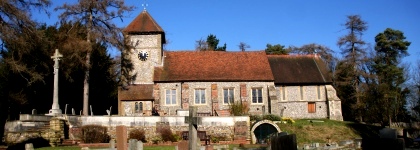
There has been a church in Farnborough for many centuries. It is believed that one has stood on the high piece of land to the south of the village for about 1500 years. The view from this point takes in the farm land and natural woodland right down the valley and to the top of the next hill.
 |
 |
However, Farnborough only became a full parish in 1876, with George William Hingston as its first Rector. Before that Farnborough was part of the larger and more populous parish of Chelsfield, sometimes having its own Rector. but more usually a Curate.
For full details see Chelsfield with Farnborough.
This explains why the church at Farnborough is comparatively small, even though the population of Farnborough has grown significantly since the second world war. Today the Farnborough and Chelsfield wards both have populations of around 14,500 (2021 census)
This is an early Ordnance Survey map of Farnborough dated to 1880. It shows many changes from a modern map.
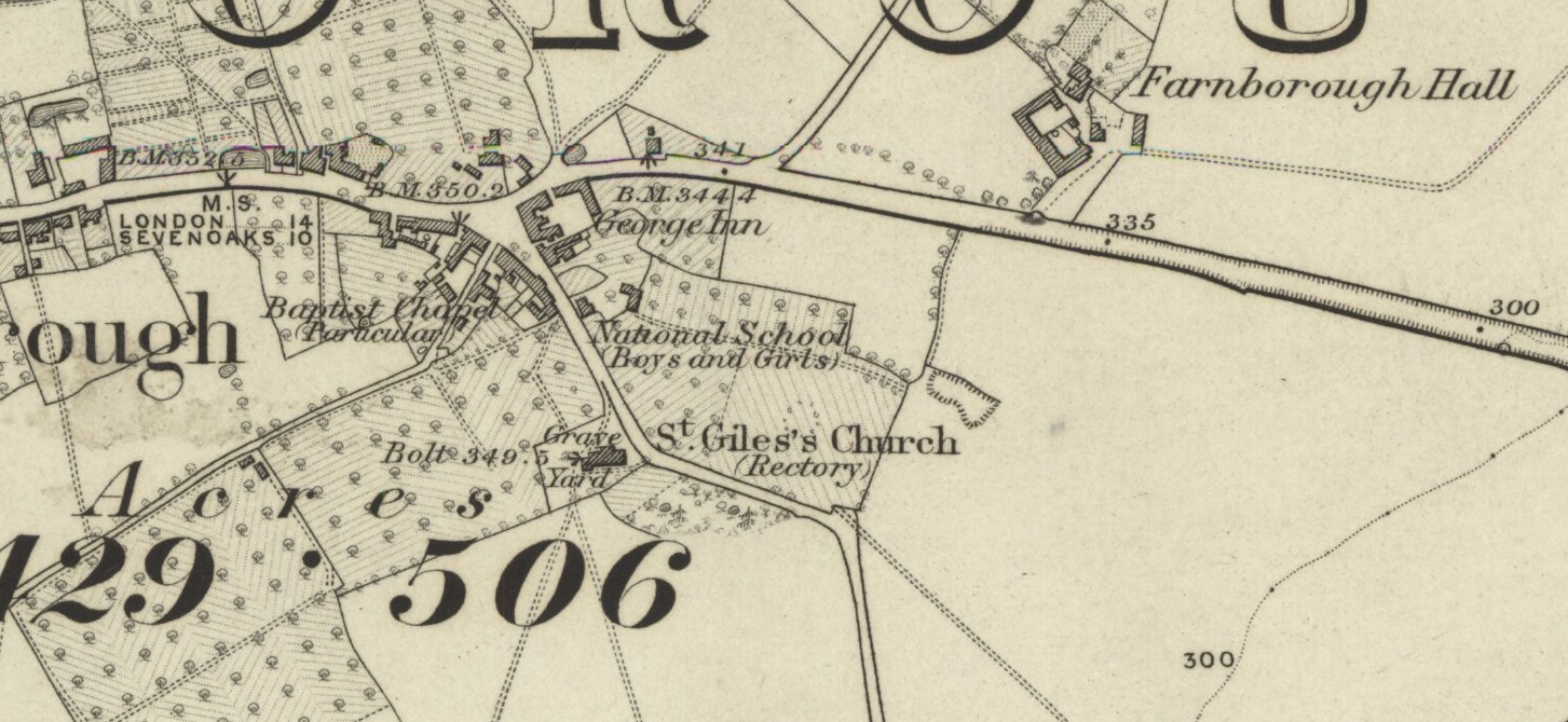
The church is there of course, but the main churchyard is not, as the land it now occupies was purchased from the Lubbock family at around the time the map would have been surveyed. Within the village the National School is shown, descended from a Dame School. There is also the original George and Dragon Inn.
To the north of the High Street there are a great many differences, Farnborough Hall stands in splendid isolation, completely surrounded by its once extensive estate lands; there is the collection of old shops and houses along the original part of the through road, but today's main parade of shops has yet to be built, and of course later housing is not shown. The through road was actually not built until about 1800, although it may have previously existed as a track. Instead, the ‘main road’, which was also the turnpike road heading toward Rye and Hastings, the second most used south of London, headed south past the church and then continued to cross Shire Lane before climbing over Old Hill to Green Street Green.
The road past the church was lowered during its
time as the turnpike, which is why today it is lower than the ground
to either side (including the churchyard). This led to the main
entrance to the churchyard being moved and the former path becoming
available for new graves. This can be traced in the dates in the
inscriptions on the burial stones in that area.
The New Parish of Farnborough
The first incumbent at St Giles was the Revd. George Hingston, pictured below.
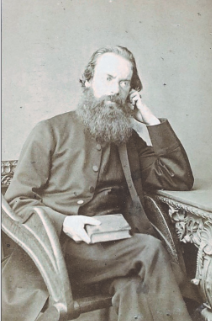 |
A somewhat unfortunate soul, he had been campaigning for
many years to obtain separation from Chelsfield, but had
been thwarted by the Revd. Folliat Baugh. The Revd. Baugh
who had been Rector at Chelsfield since 1849 was well
meaning but somewhat prone to procrastination, and it took
many years of campaigning before the separation was finally
achieved in 1876.
However, the Revd. Hingston had been somewhat worn down by his long campaigning, and from 1884 complaints started to be made about his ministry. Perhaps conveniently The Revd. Hingston died a year later, to be succeeded by the Revd. Frederick Kelly. |
Many changes then started to take place at St.
Giles, no doubt spurred on by its new independent status and driven
by the energetic Revd. Kelly.
The Chancel and East Window
There is no way of knowing if the Norman church of St. Giles possessed a chancel, but at some time circa 1200 one was constructed to the East of the nave. It was in the Early English style of architecture, which was the first of the gothic styles prevalent during the 13th century, being typified by tall thin windows known as lancets. This first chancel was to survive almost intact until its restoration in 1886.
The new chancel, being almost identical in size and shape to the original, was probably built to reuse the existing foundations.
 |
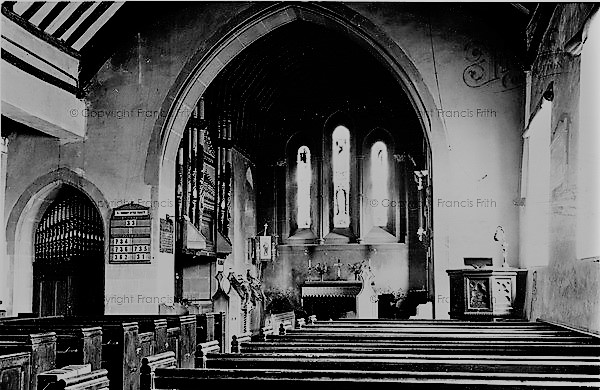 |
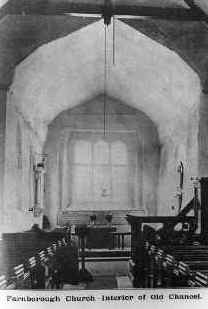
| The Chancel circa 1880, before the 1885 changes | The Chancel circa 1955, before the organ pipes were moved to above the gallery. |
The most interesting interior feature, now lost, was the East Window (above, left) which before restoration seems to have been quite unusual, being a large rectangular opening placed in the East wall, subdivided into three lights each with a round head.
The architect for the work, Joseph Clarke the Diocesan Architect, clearly felt that as the chancel was Early English in style it should have an East window to suit. The new window consists of three lancet lights, with the central one being taller than the two flanking, these being divided by two columns formed from sections of Purbeck Marble divided by moulded courses of Bath Limestone.
The Organ
In 1885, Mr Fox, of the local brewing family at Green Street Green, offered the church a new organ with the proviso that the congregation provide a suitable chamber to house it. This was to replace a much smaller barrel organ donated in 1842, also by the Fox family, that had variously resided in the chancel, and in the gallery amongst the parishioners,
The offer was taken up promptly, and by 1886 Joseph Clarke had been appointed also to oversee this work, which involved enlargement of the building on the north side to create the new chamber.
Later the organ moved to its present position above the balcony at the back of the church, the console remaining in the chancel. The organ was rebuilt in the 1980s and further refurbished in 2022.
The Nave
Changes were also made in the nave, notably regarding the windows. The four windows in the South wall of the Nave are of the same dimensions as those in the North wall, and until the 1890s were identical.
By the 1880s, the condition of these windows gave considerable cause for concern, and an entry in the Churchwardens' log book of 18 July 1895 records that the windows had been rebuilt in their present form, a development no doubt given impetus by the new status of the Parish.
The Churchyard
The largest development instigated by the change in Parish status was outside the church. The original Churchyard, the area immediately surrounding the building, 0.35 acres in extent, was probably in use as the Parish Burial Ground by 1000 A.D.
As headstones were not customary until the eighteenth century, and then only for the wealthy, it served the needs of the parish until 1854. This was when the first extension of the churchyard took place round the North and West sides of the original ground.
Once Farnborough became a full parish in 1876 an arrangement was made to purchase land from the Lubbock family to further extend the graveyard.

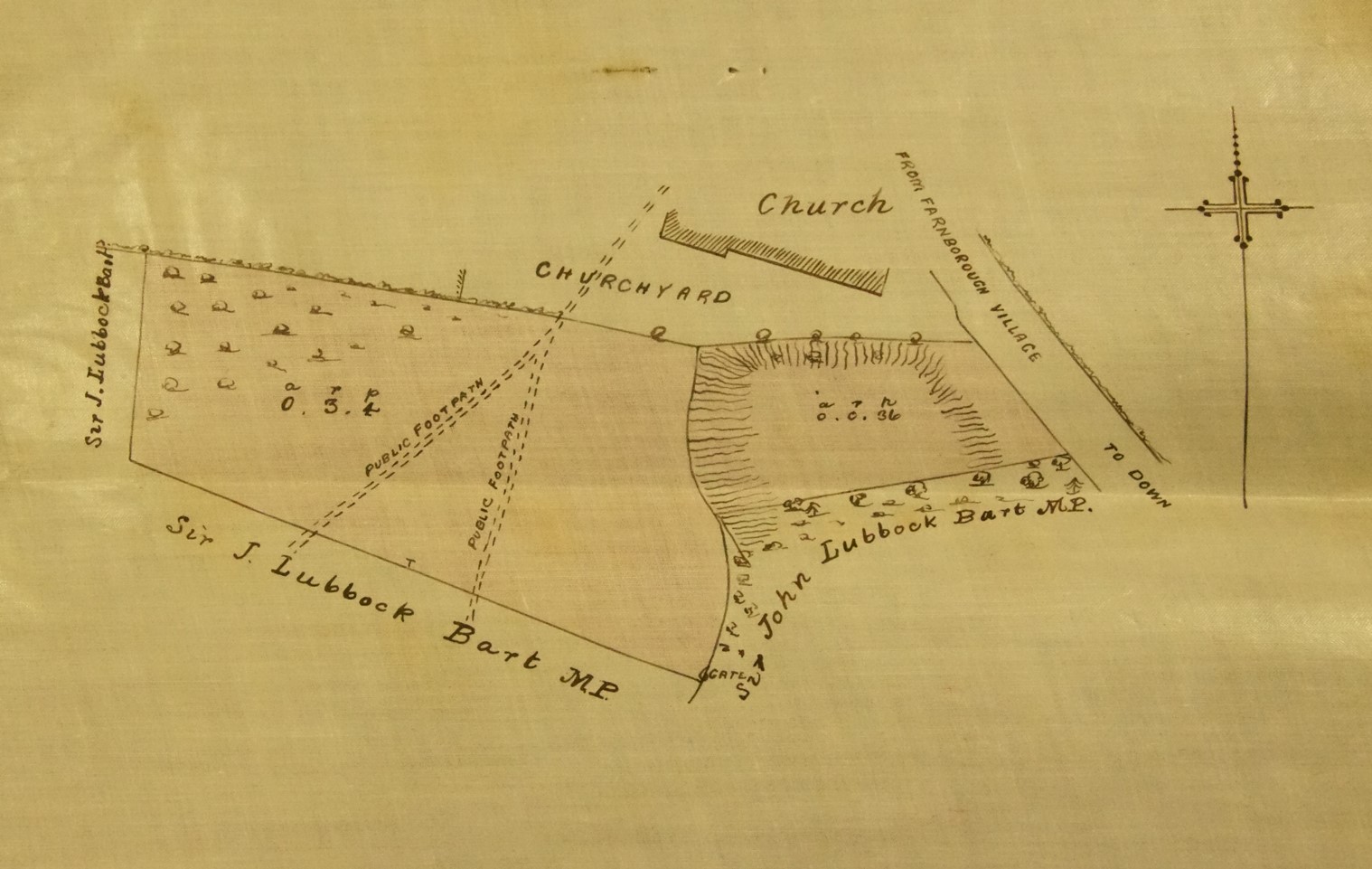
The plan above, dated 1885, shows what is now part of the main (new) graveyard before purchase, The path heading diagonally down toward the common has since disappeared. It was extended in 1935 and again in 1995. The part of this area immediately to the south of the church had historically been used for chalk extraction. It was not brought into use for graves until about 1925, after it had been filled in and levelled. The graveyard currently has capacity for about 22 years of further burials.
Elsewhere in the Parish
The largest institution in 1876 was the Workhouse at Locksbottom. This was constructed in 1844, replacing an earlier one at Cudham that dated from 1731, the buildings of which still exist as private residences. The new and larger Workhouse was a response to the 1834 Poor Law Amendment Act. The story though goes back to Queen Elizabeth 1st , whose Parliament passed the 1601 Poor Law, which confirmed that it was the responsibility of the Parish Council to provide relief and support for the aged, poor, sick and orphan children of their respective Parish - a benevolent proposal, which inevitably was at a cost to the ratepayers of the Parish to provide.
In the twentieth century the workhouse progressively changed its function to that of a hospital, a process completed formally in 1936. It was incorporated into the new NHS in 1948. The hospital closed in 1998, and the buildings were demolished apart from the chapel which remains. The site now hosts the Princess Royal University Hospital, which opened in 2003.
Locksbottom was also for many years where the Traveller community overwintered, before heading down into Kent for the summer trade. They resided mainly on Tugmutton Common, but also on the other (north) side of Crofton Road on what was then called Brasted Green. This was where the Farnborough Park estate was later built.
Once the Metropolitan Commons Act was passed in 1866 it was only a matter of time before most of the common land within Metropolitan areas - which included London and its environs such as Farnborough - were subject to enclosure. This made it easier to move non-parishioners and itinerants such as the Travellers off the Common. The Commons Protection Committee was formed on 17th June 1887, with the objective of fully clearing the Common. This Committee contained local business men and farmers such as J.F. and W. Fox, members of the Fox family which owned a brewery business in Green Street Green, and J.W. Stow, fruit grower. Interestingly, one of the committee members, H.N Penfold, beer retailer at the Coach and Horses in Farnborough, long gone, had a Traveller surname. Full eviction of the Travellers from the common was achieved by 1904.
Traveller families continue to live in the area up to the present day, with many family burials recorded in the registers of St. Giles Church. A remarkable funeral procession consisting of some 20,000 people took place in 1933 from Tugmutton Common to Farnborough churchyard to witness the burial of the famous Gypsy Lee (Urania Boswell).
There has also been some industry in the Parish, including engineering, specialist manufacture of cams and other components for the motor industry, and even a maker of aeroplanes. But the most prominent was the Oak Brewery at Green Street Green. This opened in 1818, but closed finally in 1909 after years of mismanagement by later generations of the Fox family. It became a barracks during the first war, and later some of the buildings on the site were used for other purposes notably the manufacture of cables and plastic products. The entire site was eventually cleared in 1990 to make way for new housing.See also the Farnborough Village History website at
https://www.farnborough-kent-village.org.uk/index.html
Parish Boundary Change
In 1938, the part of the Parish to the south of Shire Lane was detached to form, along with parts of the Parishes of Chelsfield and Knockholt, the new Parish of Green Street Green. This was probably the first change in the boundaries of the Parish of Farnborough since it came into being. The resulting boundaries continue to the present day.
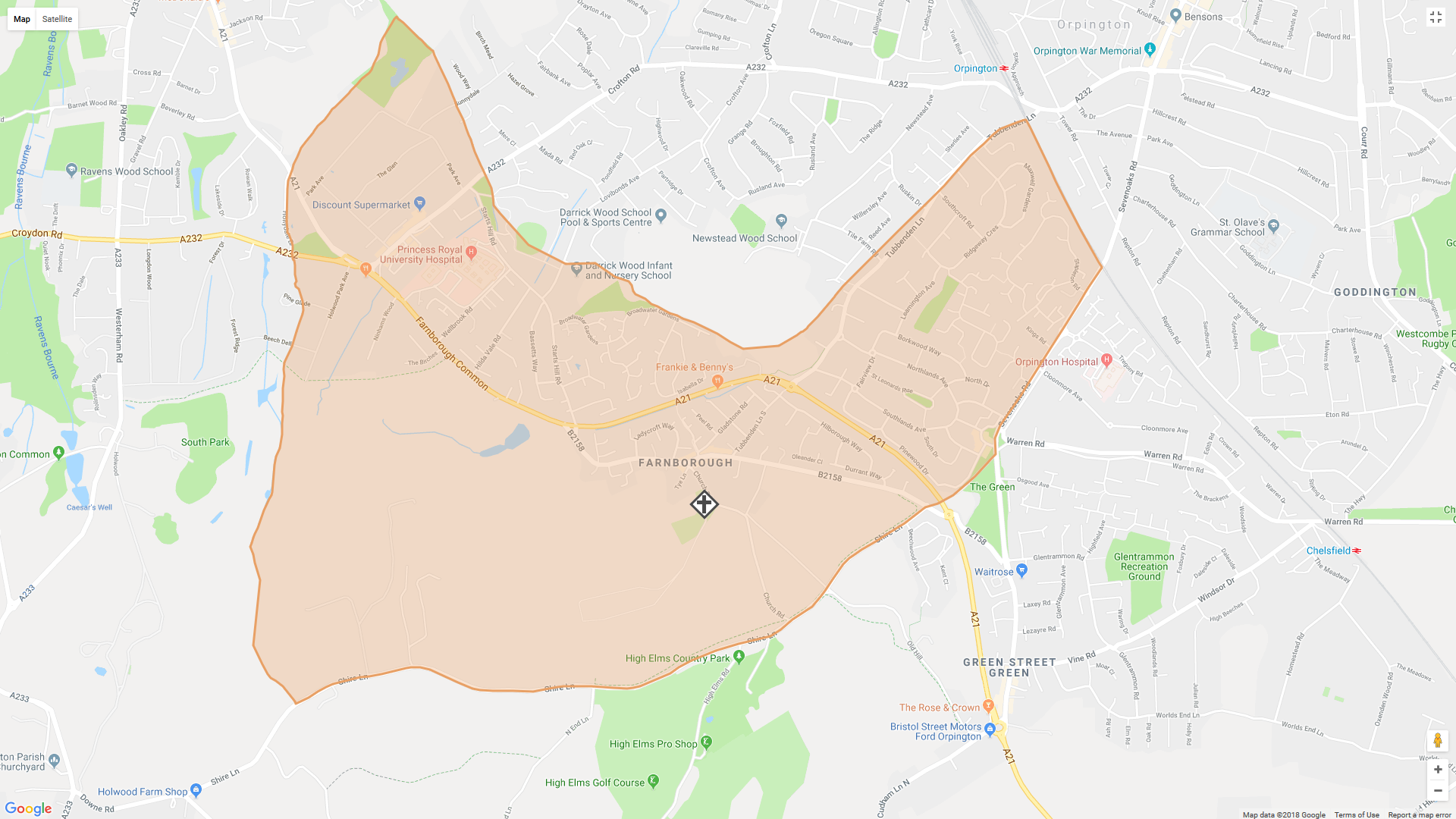
Above is a modern map of Farnborough Parish, which maintains the boundary established in 1938. After the Second World War, the Parish of Farnborough began to grow in population. New housing developments were established and by the 1950s it was recognized that an additional place of worship was needed to serve the increasing number of parishioners resident in the part of the Parish separated since 1927 by Farnborough bypass.
On Sunday 22nd June,1958 ‘The New Hall Church’, situated in
Leamington Avenue, Orpington was opened and dedicated. Ten years
later the Hall was re-named St. Nicholas’ Church Hall. It is now St.
Nicholas Church, the second church within the Parish of Farnborough.
Rectors of Farnborough
The first Rector of Farnborough Parish, George William Durrock Hignston (1876), was succeeded in 1885 by Frederick Jessop Kelly, and in 1898 by Groves Lombard.
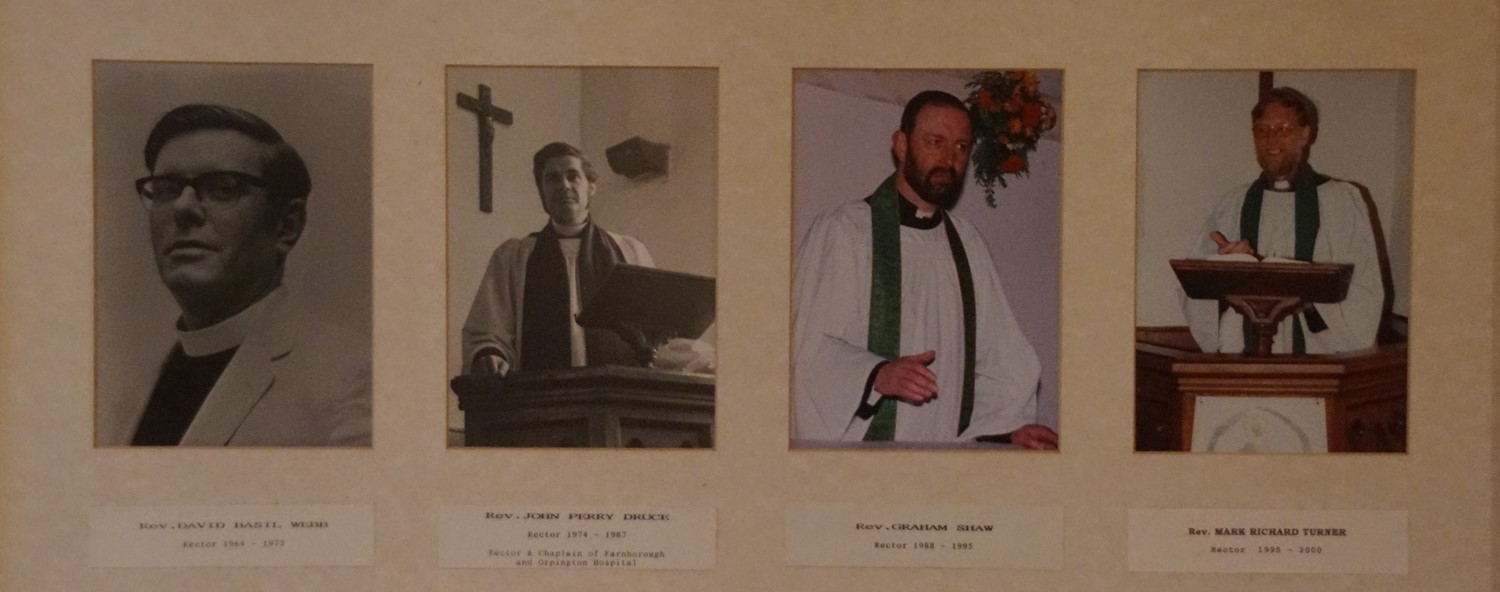
There were eight Rectors in the twentieth
century, who are shown in these photographs, which are on display by the
font in the church..
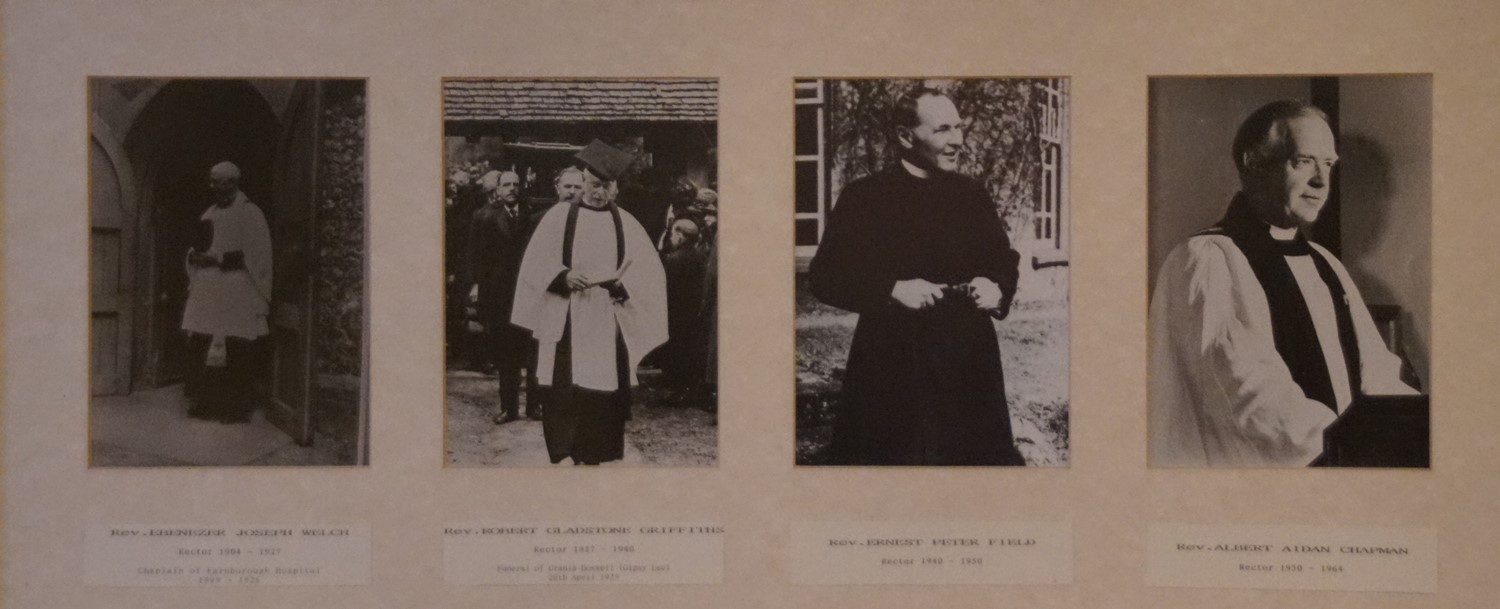
| Rector 1904 - 1927 | Revd. Ebenezer Joseph Welch | ||
| Rector 1927 - 1940 | Revd. Robert Gladstone Griffiths | ||
| Rector 1940 - 1950 | Revd. Ernest Peter Field | ||
| Rector 1950 - 1964 | Revd. Albert Aidan Chapman | ||
| Rector 1964 - 1973 | Revd. David Basil Webb | ||
| Rector 1974 - 1987 | Revd. John Perry Druce | ||
| Rector 1988 - 1995 | Revd. Graham Shaw | ||
| Rector 1995 - 2000 | Revd. Mark Richard Turner |
The present incumbent, Revd. Matthew Hughes, came to St. Giles in 2001.
PARISH HISTORY
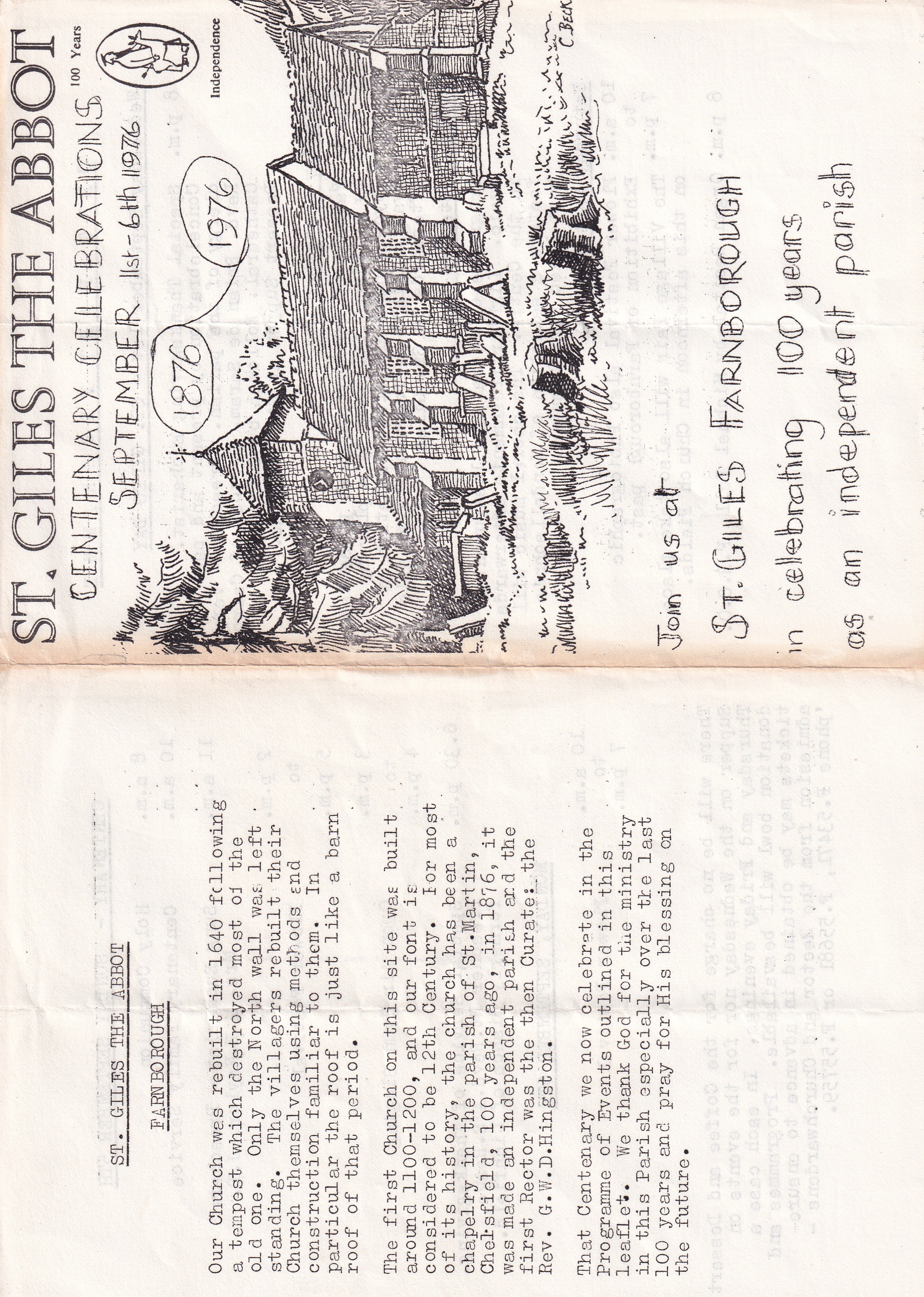
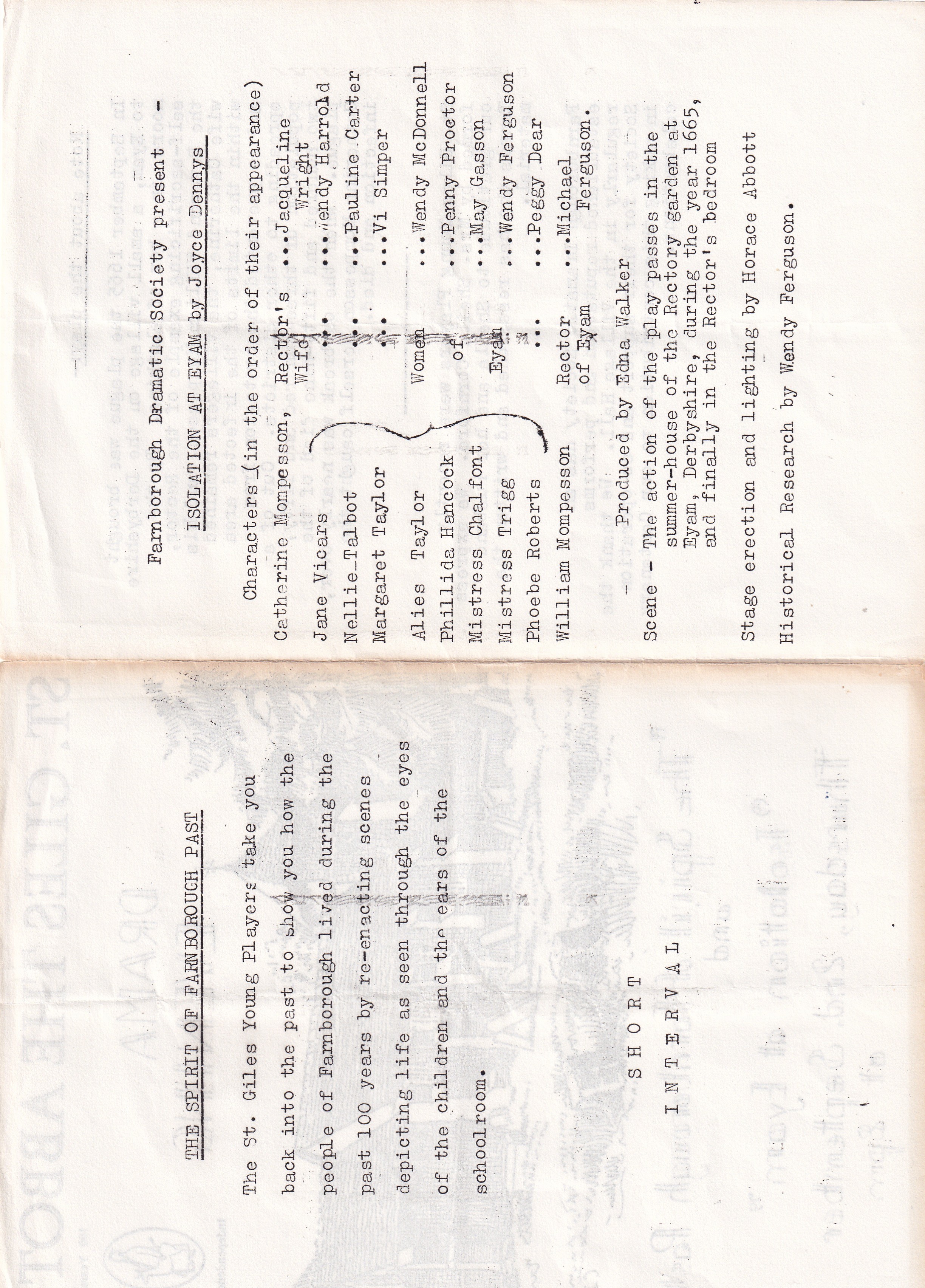
The 100th Anniversary (1976)
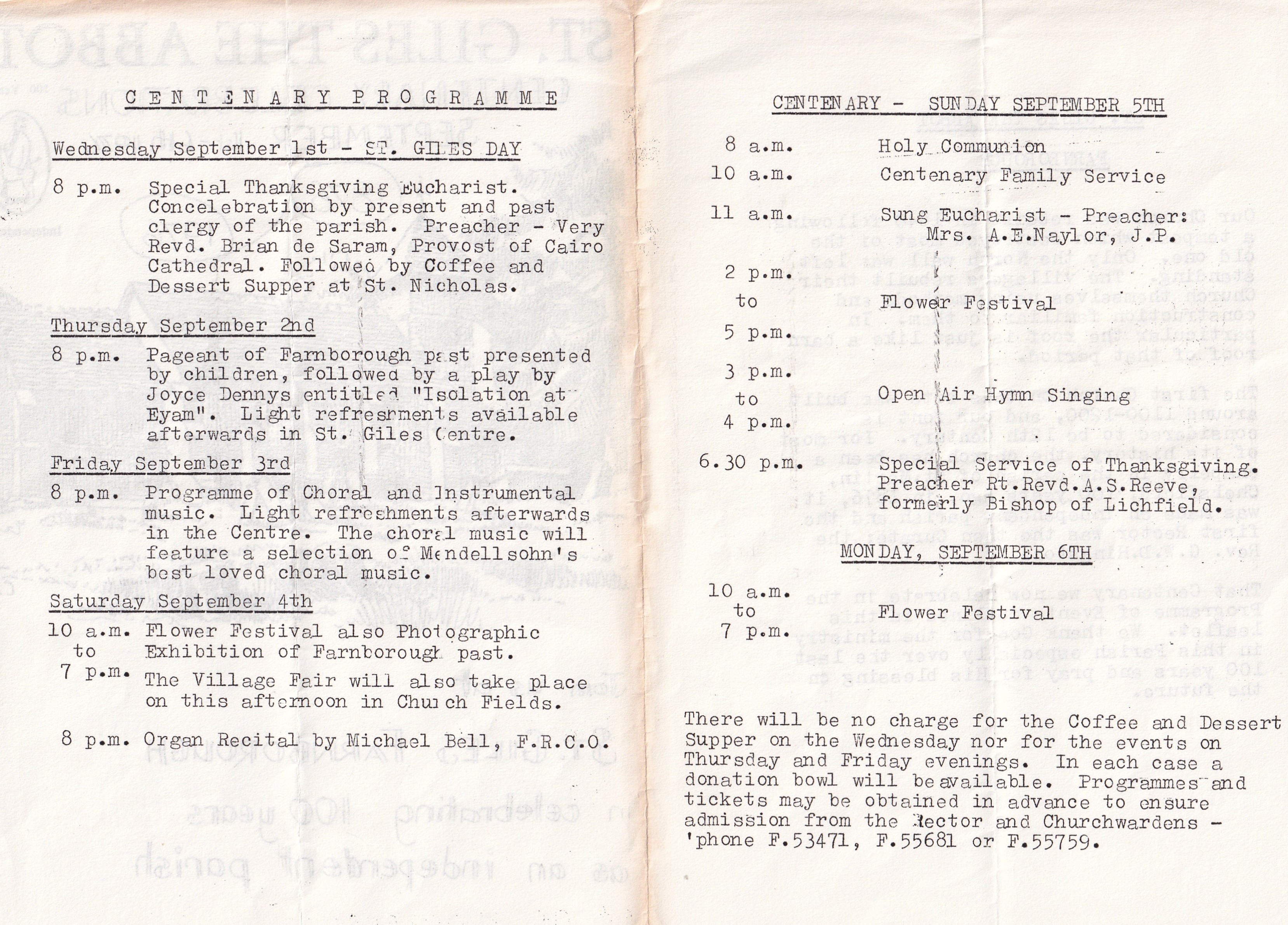
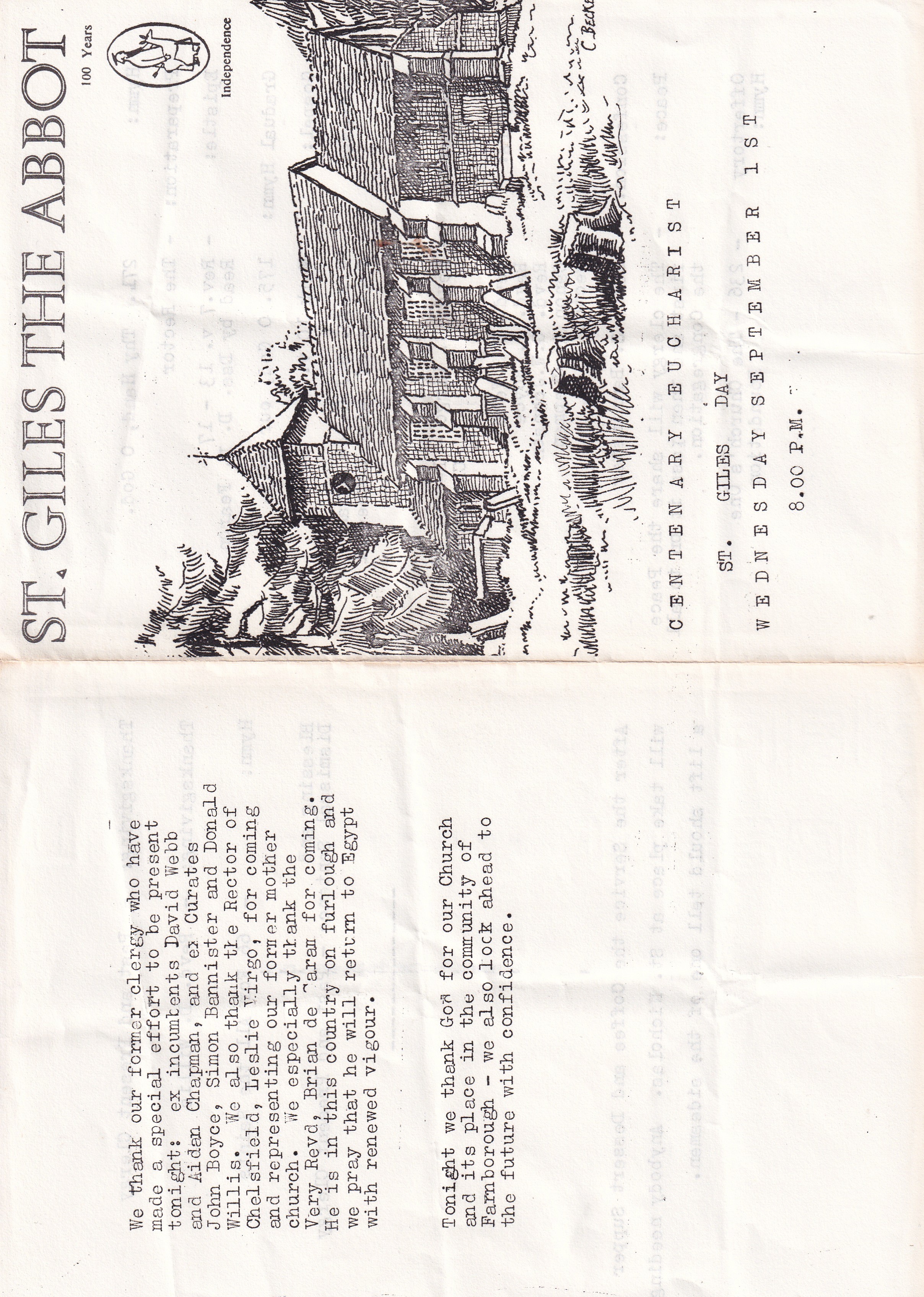
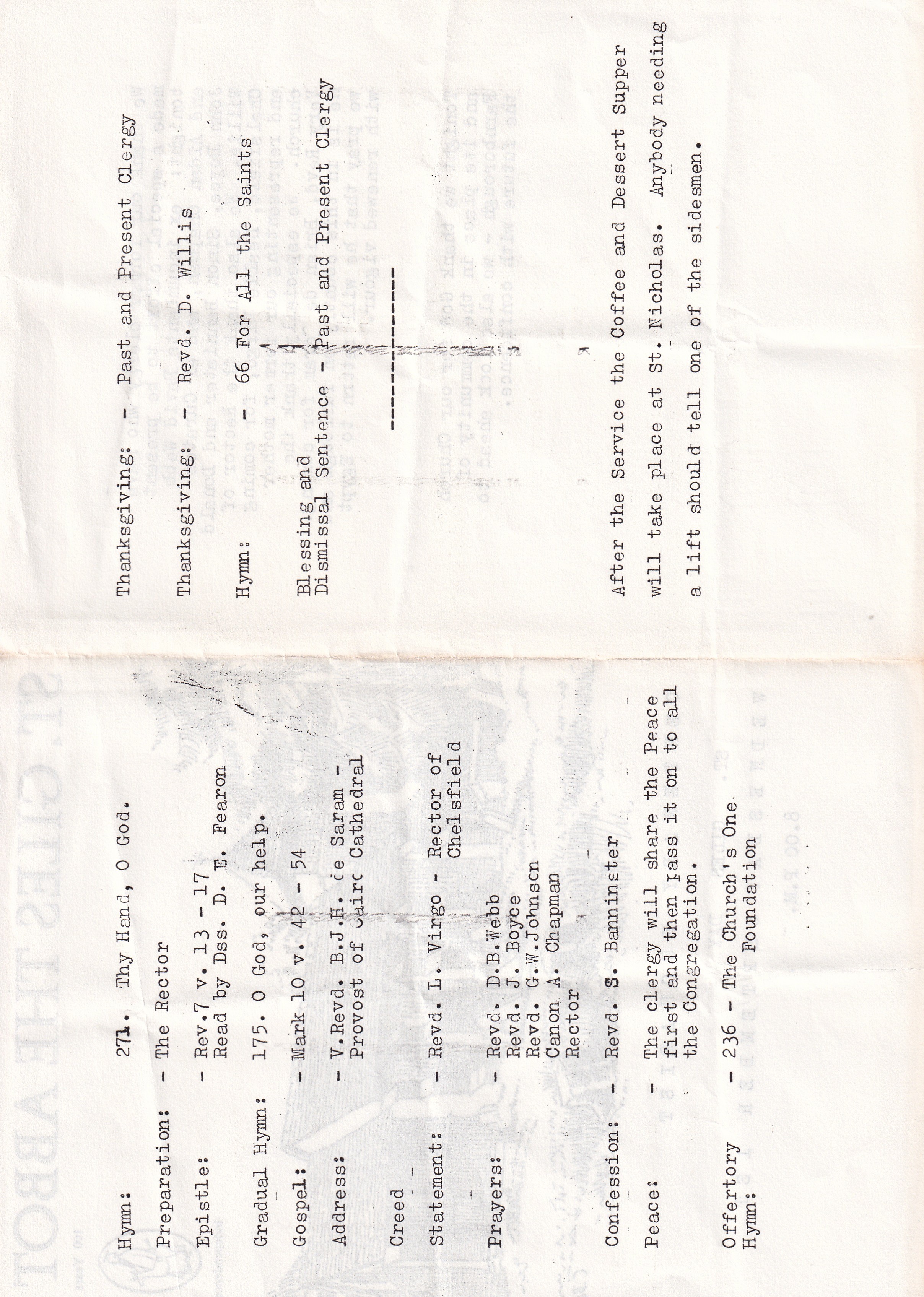
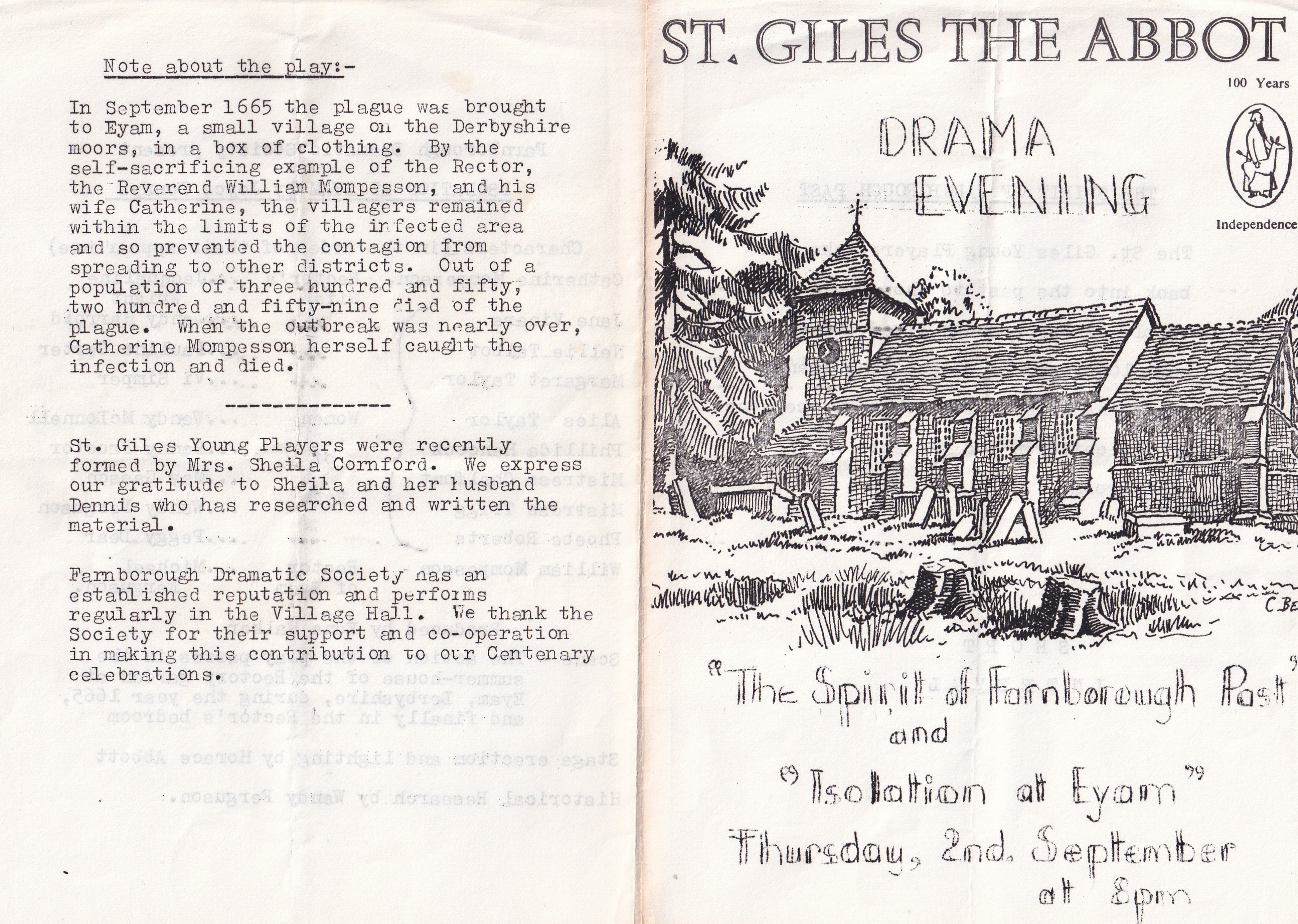
A number of special events were organised to maek the 100th anniversary in 1976. Detailes are given in the programme sheets below. Click to enlarge
The Parish Today
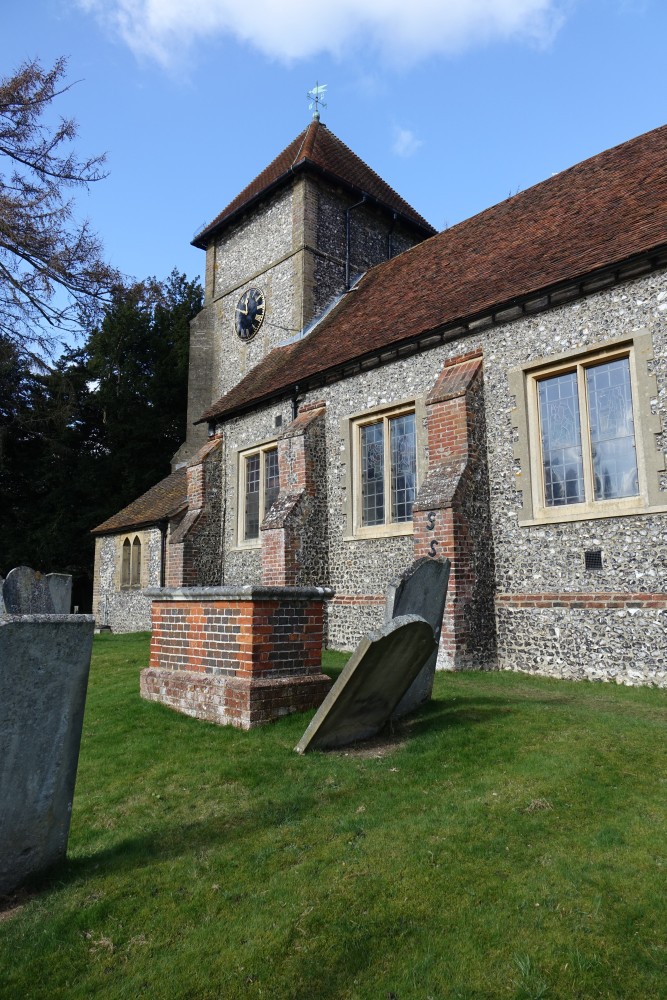
Life and worship at St. Giles continues, with three or four services on Sundays, as well as one each Thursday. There is a particular focus on music, with an active choir of a standard high for a small parish church.
My three children were all choir members in their youth, and benefitted from financial incentives to sing in the choir at weddings. Thirty years ago, there were far fewer premises licenced to host weddings than there are today, so for St. Giles it was a useful source of income. My daughter’s record was to sing at six weddings on a single Saturday. Today there are rarely as many weddings in a year.
Nick Reynolds